SOC 2 vs ISO 27001 vs DORA: How to Choose the Right Compliance Strategy in 2026
Introduction
As businesses expand into enterprise markets, security compliance becomes more than a documentation exercise. Customers want assurance that their vendors protect sensitive information, manage cyber risks, and maintain reliable services.
Three frameworks frequently come up in these conversations: SOC 2, ISO/IEC 27001, and the Digital Operational Resilience Act (DORA).
Although they can address related security and risk management objectives, they serve different purposes.
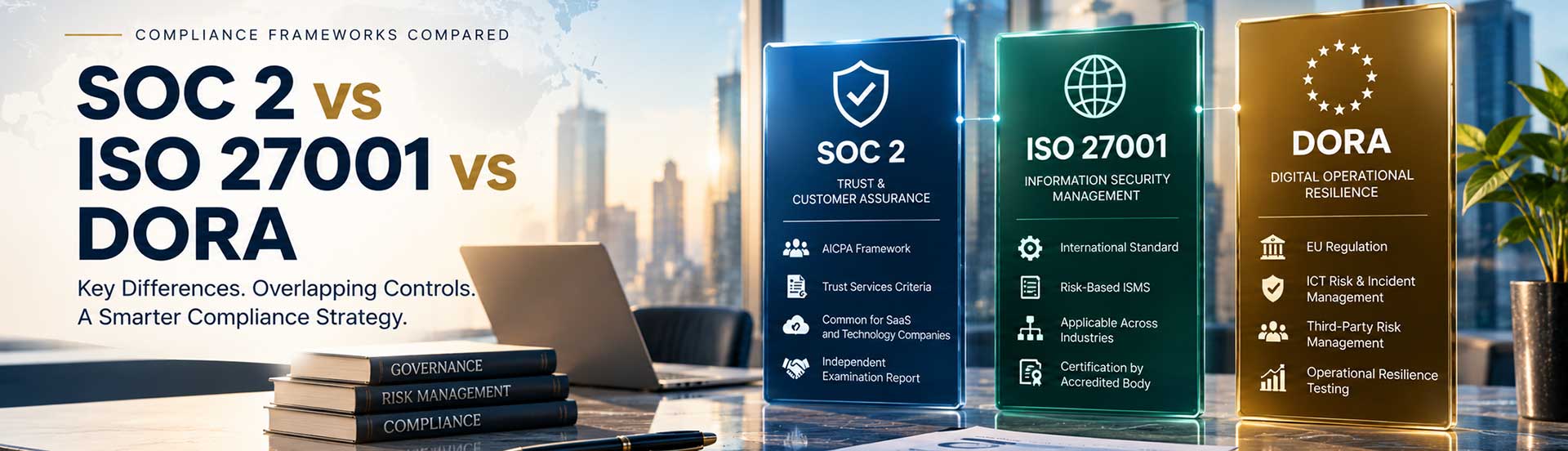
SOC 2 provides an independent examination report on controls relevant to selected Trust Services Criteria. ISO/IEC 27001 specifies requirements for an information security management system that an appropriate certification body can certify. DORA is an EU regulation establishing digital operational resilience requirements for in-scope financial entities and certain related ICT third-party arrangements.
Choosing the right approach depends on your business model, customers, markets, contractual commitments, and regulatory obligations.
This guide compares SOC 2, ISO 27001, and DORA and explains how organizations can coordinate their compliance efforts without assuming that one framework automatically replaces another.
What Is SOC 2?
SOC 2 is an assurance reporting framework associated with the AICPA’s Trust Services Criteria.
It is commonly relevant to SaaS companies, cloud service providers, technology vendors, and other service organizations that need to demonstrate how relevant controls are designed and operated.
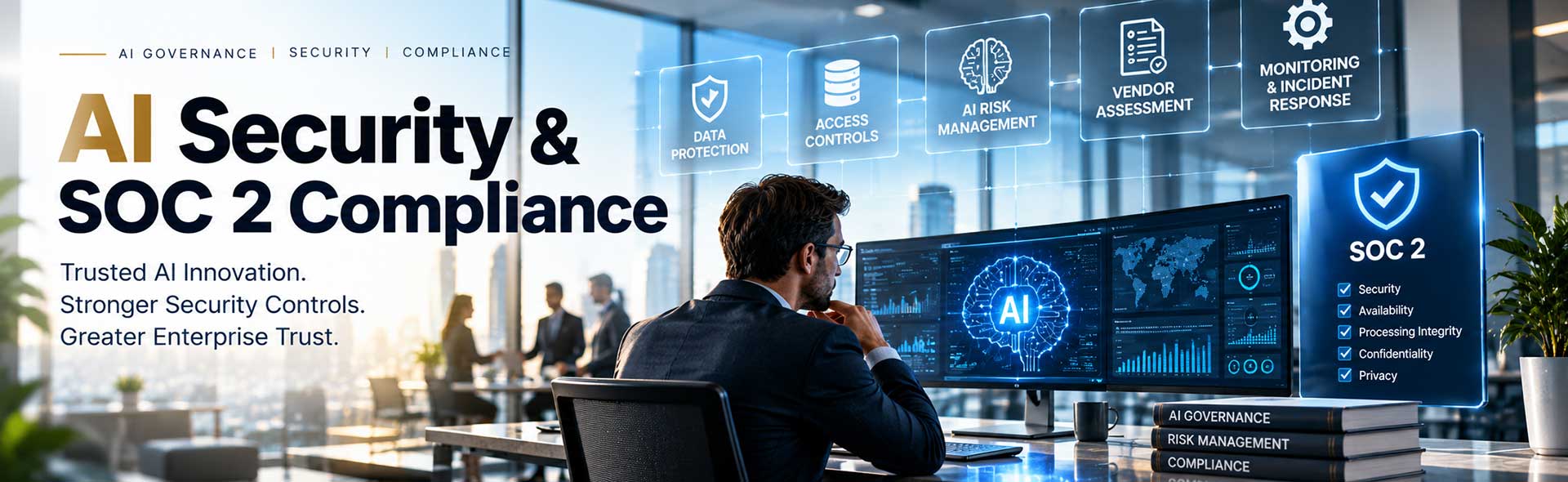
The Trust Services Criteria address:
- Security
- Availability
- Processing integrity
- Confidentiality
- Privacy
The criteria included in an engagement depend on its scope and objectives.
SOC 2 Type I and Type II
SOC 2 Type I evaluates the design of controls as of a specified date.
SOC 2 Type II evaluates both control design and operating effectiveness over a specified period.
Organizations often pursue SOC 2 when enterprise customers request independent assurance during vendor onboarding, procurement, or ongoing security reviews.
A SOC 2 report is not a government-issued certification. It is an independent examination report issued by a qualified CPA firm.
What Is ISO/IEC 27001?
ISO/IEC 27001 sets requirements for establishing, implementing, maintaining, and continually improving an information security management system (ISMS).
The framework takes a risk-based approach to information security governance.
Organizations define the scope of their ISMS, assess information security risks, select and implement appropriate controls, and establish processes for monitoring and continual improvement.
An organization that meets the applicable requirements can pursue certification through a competent certification body.
ISO 27001 is used across industries and can help organizations demonstrate a structured approach to information security management.
However, certification scope matters. A certificate does not automatically establish that every product, business unit, supplier, or location is covered.
What Is DORA?
The Digital Operational Resilience Act, or DORA, is Regulation (EU) 2022/2554.
It has been in force since 17 January 2025 and establishes requirements intended to strengthen digital operational resilience in the EU financial sector.
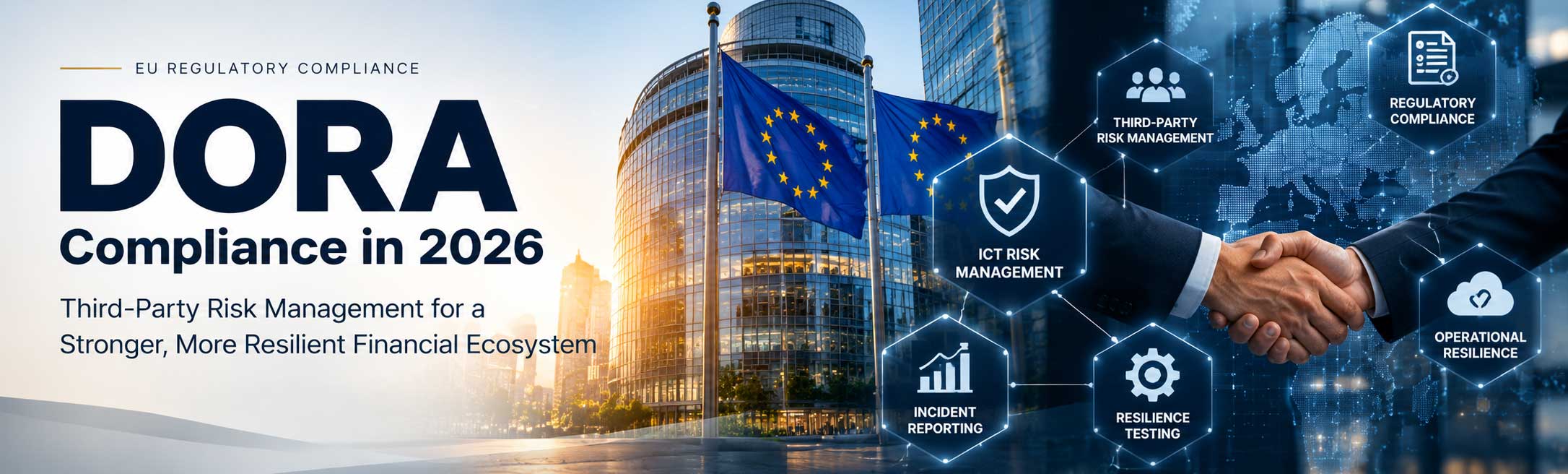
DORA addresses areas including:
- ICT risk management
- ICT-related incident management, classification, and reporting
- Digital operational resilience testing
- ICT third-party risk management
- Information sharing arrangements
- Oversight of ICT third-party providers designated as critical
DORA is a regulation, not a conventional certification scheme.
Financial entities within its scope must assess their applicable obligations. ICT providers serving financial institutions may also need to meet relevant contractual, operational, and customer assurance expectations.
A SOC 2 report or ISO 27001 certificate may support parts of a DORA compliance program, but neither automatically demonstrates compliance with all applicable DORA requirements.
SOC 2 vs ISO 27001 vs DORA: Key Differences
| Comparison | SOC 2 | ISO/IEC 27001 | DORA |
|---|---|---|---|
| Primary purpose | Independent assurance over relevant service organization controls | Information security management system requirements | Digital operational resilience regulation |
| Nature | Independent examination and reporting framework | International standard with a certification pathway | EU regulation |
| Typical audience | SaaS, cloud, and service organizations | Organizations across industries | In-scope financial entities and relevant ICT third-party relationships |
| Main focus | Controls relevant to selected Trust Services Criteria | Risk-based information security management | ICT risk, incidents, testing, third-party risk, and resilience |
| Type of outcome | SOC 2 examination report | ISMS certification when successfully assessed by a certification body | Compliance with applicable legal obligations |
| Can it replace DORA? | No | No | Not applicable |
| Evidence reuse | Can support overlapping security controls | Can support overlapping security controls | Requires mapping to applicable DORA obligations |
The frameworks overlap in some areas but aren’t interchangeable.
Which Framework Should Your Organization Choose?
Choose SOC 2 when enterprise customers request assurance
SOC 2 may be a strong choice when your business sells SaaS products or technology services to customers who want independent information about your controls.
It can support security due diligence and vendor risk reviews, provided the report’s scope addresses the relevant systems and criteria.
Choose ISO 27001 when you need a formal information security management system
ISO 27001 may be appropriate when your organization wants a structured ISMS and a certification recognized by customers across different industries and markets.
It can also help establish governance and risk management processes that support other compliance initiatives.
Prioritize DORA assessment when your business has applicable EU financial-sector obligations
If your organization is an in-scope financial entity, DORA should be evaluated according to the applicable legal requirements.
If you are an ICT provider serving a financial entity, understand your contractual commitments and the specific requirements your customer expects you to support.
Do not assume that obtaining SOC 2 or ISO 27001 removes the need to assess DORA-specific obligations.
Can SOC 2, ISO 27001, and DORA Be Combined?
Yes. Organizations can coordinate their compliance activities to reduce unnecessary duplication.
Many controls support multiple security and risk management objectives. For example, access management, incident response, change management, risk assessment, business continuity, and supplier oversight may be relevant across several frameworks.
A coordinated approach can help organizations:
- Map existing controls to multiple requirements
- Reuse evidence where it is relevant and sufficiently current
- Identify common control owners
- Establish consistent policies and procedures
- Reduce repeated evidence collection
- Maintain separate records for framework-specific requirements
- Prioritize remediation based on risk and regulatory obligations
However, overlapping controls do not mean identical requirements.
The organization should document its mapping methodology, confirm that evidence satisfies each relevant requirement, and identify obligations that need separate treatment.
A Practical Multi-Framework Compliance Roadmap
Step 1: Understand business objectives
Identify target markets, enterprise customer requirements, regulatory obligations, contractual commitments, and expected assurance outcomes.
Step 2: Define scope
Establish which legal entities, products, systems, services, locations, and suppliers are included.
Step 3: Assess existing controls
Review policies, technical controls, risk assessments, incident response procedures, vendor oversight, and available independent assurance evidence.
Step 4: Map requirements
Create a control matrix that maps applicable SOC 2 criteria, ISO 27001 requirements, and DORA provisions to existing controls and evidence.
Step 5: Identify gaps and prioritize remediation
Distinguish common control gaps from requirements unique to a particular framework.
Prioritize improvements according to risk, regulatory significance, customer expectations, and operational impact.
Step 6: Establish ongoing governance
Define control ownership, evidence collection, management reporting, review intervals, and reassessment procedures.
A sustainable program should integrate compliance into daily operations instead of relying on last-minute preparation before an audit or assessment.
Common Compliance Planning Mistakes
Organizations should avoid:
- Pursuing a framework without understanding customer or regulatory requirements
- Assuming one certificate guarantees compliance with another framework
- Defining an overly broad or unclear scope
- Reusing evidence without checking its relevance
- Treating policies as proof that controls operate effectively
- Ignoring suppliers and outsourced services
- Failing to maintain evidence after the initial assessment
- Treating compliance as a one-time project rather than an ongoing process
A well-designed compliance roadmap helps management allocate resources to the controls and obligations that matter most.
How E Com Security Solutions Supports Compliance Readiness
E Com Security Solutions provides cybersecurity and regulatory compliance support designed to help organizations understand requirements, assess existing controls, identify gaps, and plan remediation.
Depending on the engagement, services may include:
- SOC 2 readiness assessment and evidence review
- ISO 27001 readiness and control mapping support
- DORA compliance assessment and gap analysis
- ICT third-party risk assessment
- Policy and procedure reviews
- Remediation planning and follow-up validation
- Multi-framework control mapping
Our approach focuses on identifying opportunities to reuse relevant evidence and strengthen shared controls while maintaining visibility into framework-specific obligations.
Define the scope, deliverables, and nature of any independent assurance clearly for each engagement.
Conclusion
SOC 2, ISO 27001, and DORA address different but related aspects of security, risk management, and operational resilience.
SOC 2 can help service organizations demonstrate relevant controls through an independent examination report. ISO 27001 provides requirements for an information security management system and a certification pathway. DORA establishes regulatory obligations for digital operational resilience within its scope.
The right strategy depends on your business, customers, and applicable legal requirements.
Rather than treating compliance frameworks as competing alternatives, organizations can develop a coordinated roadmap that aligns overlapping controls, reuses suitable evidence, and addresses each framework’s distinct requirements.
Need help choosing your compliance roadmap?
E Com Security Solutions can help assess your existing controls, identify compliance gaps, and determine practical next steps for SOC 2, ISO 27001, and DORA. Get Started >>
Contact our team to discuss your requirements.
Disclaimer: This article provides general information and is not legal advice. Framework applicability, scope, and assurance requirements depend on the organization’s circumstances.