AI Security and SOC 2 Compliance: What SaaS Companies Need to Know in 2026
Introduction
Artificial intelligence is becoming part of everyday business operations. SaaS companies use AI to automate workflows, analyze customer information, generate content, support development, and improve customer experiences.
However, AI adoption also introduces security and governance questions.
Where is customer data sent when an AI feature is used? Can an AI service provider retain or train on submitted information? Who can access prompts, outputs, and associated logs? How are AI-generated actions reviewed? What happens when an external AI provider changes its service or experiences a security incident?
Enterprise customers increasingly want clear answers to questions like these before trusting a SaaS provider with sensitive business information.
For companies pursuing SOC 2, these questions matter for how they design, implement, and evidence existing security controls.
This guide explains how SaaS organizations can approach AI security alongside SOC 2 compliance, strengthen their control environment, and prepare for enterprise security reviews.
Why AI Security Is Becoming a Compliance Priority
AI systems introduce dependencies that traditional application inventories or vendor reviews may not fully capture.
A company might use a third-party language model, an AI coding assistant, an automated customer support agent, or an AI-based analytics service without having a complete picture of what data each system processes.
Potential risks include:
- Unauthorized disclosure of sensitive information
- Excessive permissions granted to AI applications or agents
- Inadequate authentication and access restrictions
- Unclear data retention and deletion practices
- Prompt injection and unsafe handling of untrusted inputs
- Inadequate monitoring of AI-enabled actions
- Insufficient oversight of external AI service providers
- Weak documentation of changes to AI systems
The World Economic Forum’s Global Cybersecurity Outlook 2026 highlights AI-related vulnerabilities and data exposure as key concerns.
For SaaS businesses, the practical implication is straightforward: support AI adoption with appropriate governance, risk assessment, access control, monitoring, and evidence.
What Is the Relationship Between AI Security and SOC 2?
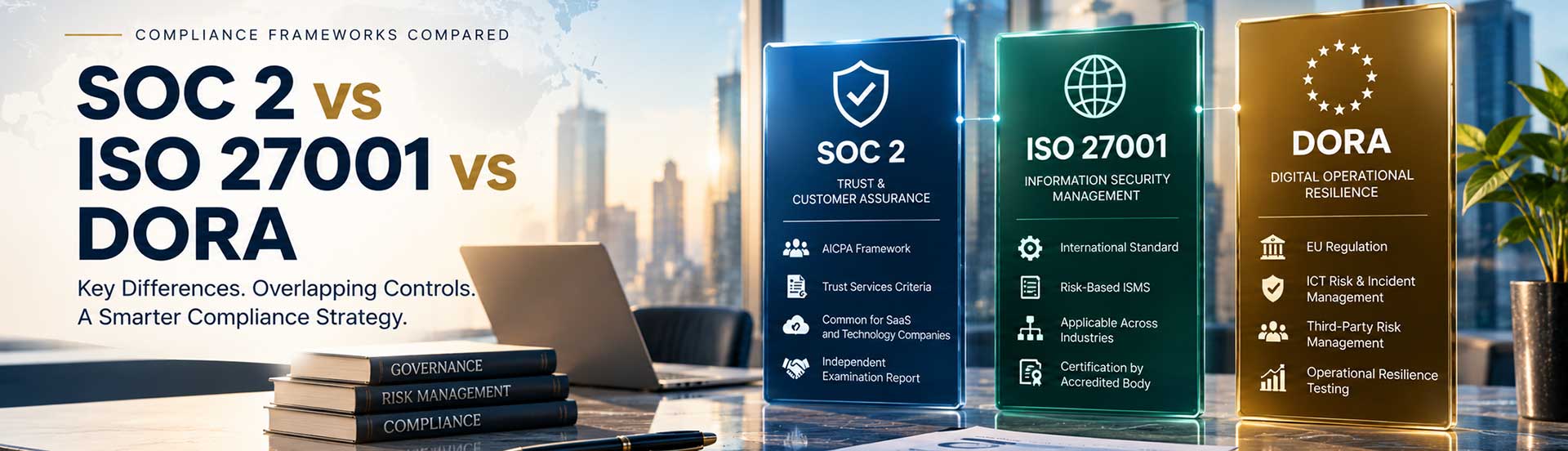
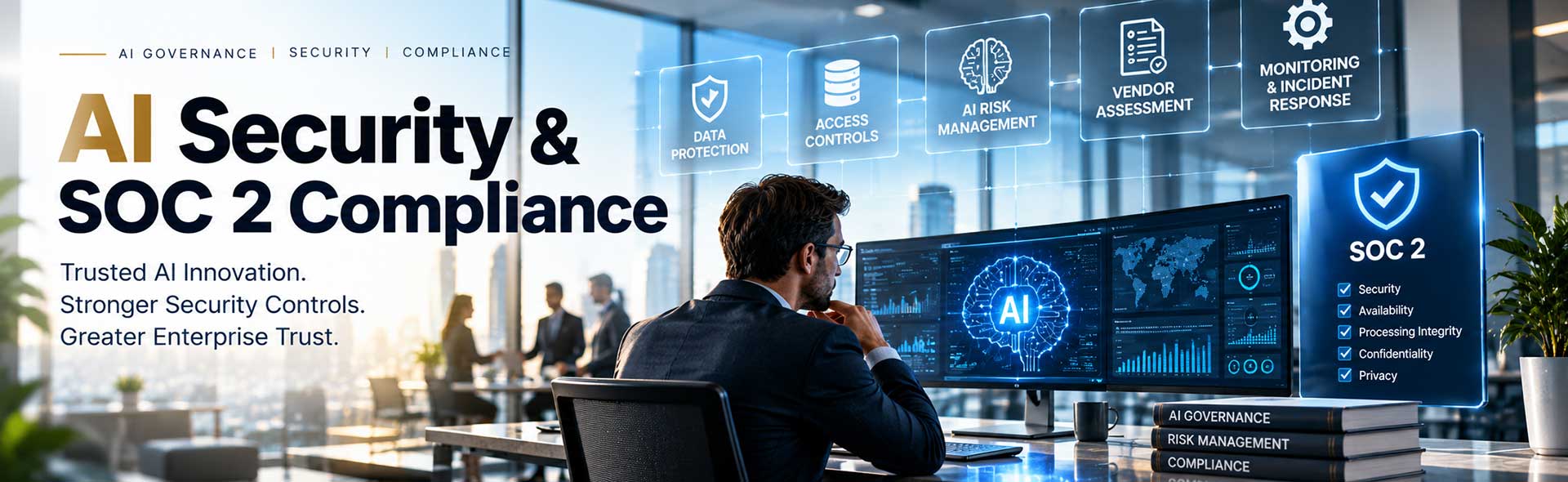
SOC 2 is an examination and reporting framework developed around the AICPA’s Trust Services Criteria. It evaluates controls relevant to security, availability, processing integrity, confidentiality, and privacy, depending on the engagement scope.
SOC 2 is not an AI certification. It does not automatically validate the accuracy, fairness, safety, or regulatory compliance of every AI model a company uses.
Nevertheless, existing SOC 2 controls can provide an important foundation for managing risks associated with AI-enabled products and internal AI tools.
1. Security and access management
Organizations should identify who can access AI applications, models, supporting infrastructure, and sensitive information.
Practical measures include:
- Role-based access controls
- Multi-factor authentication where appropriate
- Least-privilege permissions
- Periodic access reviews
- Credential and secret management
- Monitoring of privileged and automated accounts
When AI agents can perform actions, limit permissions to the tasks and resources they actually need.
2. Data confidentiality and privacy
AI features may process prompts, documents, customer records, source code, or other sensitive data.
Organizations should understand how the AI provider collects, transmits, stores, retains, and deletes that information.
Key questions include:
- Does the AI provider retain submitted information?
- Can the AI provider use customer data to train or improve a model?
- Where is data processed and stored?
- Who can access prompts and generated outputs?
- Are sensitive data types restricted or redacted?
- Do contracts establish appropriate data protection responsibilities?
The answers should inform the organization’s risk assessment, contractual controls, and data handling procedures.
3. Change management and secure development
AI-enabled features may change rapidly as models, prompts, integrations, and automated workflows evolve.
A documented change management process can help ensure that significant changes are reviewed, tested, approved, and monitored.
Organizations should consider security testing for new AI integrations, validating permissions, reviewing dependencies, and establishing procedures for responding to unexpected model behavior.
The level of review should match the feature’s potential impact.
4. Monitoring and incident response
Traditional application monitoring may not capture every risk introduced by AI-enabled workflows.
Depending on the architecture, organizations may need to monitor unusual access, suspicious prompts, excessive automated actions, unexpected data transfers, or abuse of connected tools.
Incident response procedures should address relevant AI-related scenarios, including unauthorized disclosure, compromised AI credentials, unsafe automated actions, and incidents involving external AI service providers.
5. Vendor and third-party risk management
AI services often introduce additional third-party dependencies.
Organizations should maintain an inventory of relevant AI providers and evaluate their security practices, contractual commitments, data handling, service availability, and incident notification processes.
Where an AI provider supports a critical business function or processes sensitive data, the risk assessment should reflect that context.
How to Include AI Risks in a SOC 2 Readiness Assessment
A practical AI-aware SOC 2 readiness assessment can follow these steps.
Step 1: Inventory AI usage. Identify approved and unapproved AI applications, third-party models, AI agents, integrations, and sensitive data flows.
Step 2: Assess risk. Determine which systems process confidential information, access production environments, or can execute actions on behalf of users.
Step 3: Map existing controls. Evaluate how existing SOC 2 controls address access, change management, monitoring, incident response, vendor management, and data protection.
Step 4: Identify gaps. Document missing policies, excessive permissions, weak monitoring, insufficient vendor evidence, and undocumented AI workflows.
Step 5: Remediate. Assign owners and implement appropriate safeguards, testing procedures, documentation, and monitoring.
Step 6: Collect evidence. Retain relevant approvals, risk assessments, access reviews, logs, test results, incident records, and vendor documentation.
The goal is not to add unnecessary paperwork. The goal is to show that relevant risks are identified, controls are appropriately designed, and evidence supports control operation.
SOC 2 Type I vs. Type II for AI-Enabled SaaS Companies
A SOC 2 Type I examination evaluates the design of controls as of a specified date.
A SOC 2 Type II examination evaluates control design and operating effectiveness over a specified period.
For companies with evolving AI features, this distinction matters.
Type I can help establish an initial view of control design, while Type II provides evidence about how controls operated during the examination period.
Neither report automatically validates an AI system’s overall safety. The report’s usefulness depends on the defined scope, systems covered, Trust Services Criteria included, and controls examined.
Companies should ensure they appropriately consider relevant AI services and dependencies when defining their system description and control environment.
Common AI Governance Mistakes
SaaS organizations should avoid:
- Allowing employees to submit sensitive data to unapproved AI tools
- Granting AI agents broad access to production systems
- Relying exclusively on an AI vendor’s marketing claims
- Failing to document AI-related risks and decisions
- Ignoring AI dependencies during vendor reviews
- Assuming SOC 2 automatically establishes AI regulatory compliance
- Collecting audit evidence only immediately before an examination
An effective program combines practical safeguards with clear accountability and repeatable evidence collection.
How E Com Security Solutions Can Help
E Com Security Solutions helps organizations prepare for SOC 2 through readiness assessments, control gap analysis, evidence review, and remediation guidance.
For AI-enabled SaaS companies, an engagement can also examine how existing security and governance controls address relevant AI-related risks.
Depending on scope, support may include:
- SOC 2 readiness assessment
- Security control and evidence mapping
- Access management and change management reviews
- AI service provider risk assessment
- Incident response and monitoring reviews
- Remediation planning and follow-up validation
The objective is to help organizations establish a defensible control environment that supports enterprise trust and their chosen assurance objectives.
Conclusion
AI is changing how SaaS companies build products, process information, and deliver services. It is also introducing new security dependencies that customers and security teams need to understand.
SOC 2 provides a useful foundation for demonstrating relevant security and operational controls, but companies must evaluate AI-specific risks rather than assume that existing compliance automatically covers every new use case.
By combining AI governance, access controls, vendor oversight, incident response, and reliable evidence, organizations can strengthen their security posture while continuing to innovate.
Preparing for SOC 2?
E Com Security Solutions can help your organization assess control gaps, improve evidence readiness, and prepare for an appropriate SOC 2 engagement. Get Started >>
Contact our team to discuss your SOC 2 readiness requirements.
Disclaimer: This article provides general information and does not constitute legal advice, an AI safety certification, or a guarantee of SOC 2 compliance.